

B2B purchasing is no longer done by a single salesperson and a single customer. According to a report in January 2026, an average of 13 internal stakeholders and nine external participants are involved in B2B purchasing.
Even if you have a prospect interested in your product, that doesn’t necessarily mean anything because there are 21 other people who can slow down or even sink a deal.
While most outbound marketing still targets one person, a deal can quietly sputter out in a committee that you never even got to speak with. The real question is how to work within this new framework where you’re performing for an audience you never see and are part of negotiations without having any say.
Committee creep is the real reason deals stall
At one point, few individuals were involved in a purchasing decision. There was a seller, a buyer, and maybe a few others who were counselled on the product or had control of the purse strings. While AI assistants are generally pitched as being a time-saving tool, the opposite is true for many SDRs.
AI assistance has made the buying cycle longer than it ever has been. It’s not because the process is necessarily different; the change has come from how easy it is for every layer of a company to step into any given buying decision.
Thanks to AI assistants, the time required to chime in on a purchasing decision has been reduced, allowing more people to offer their take. Depending on the business, the financial department will inevitably compare pricing and features, IT will look into integration with existing products, supply chain managers might have concerns about deliverability and distribution, the VP of retail operations might have concerns about retraining staff. The legal department, accounting, HR, office managers, product leads, writers, janitors, on down the list. Everyone will have a take on these decisions.
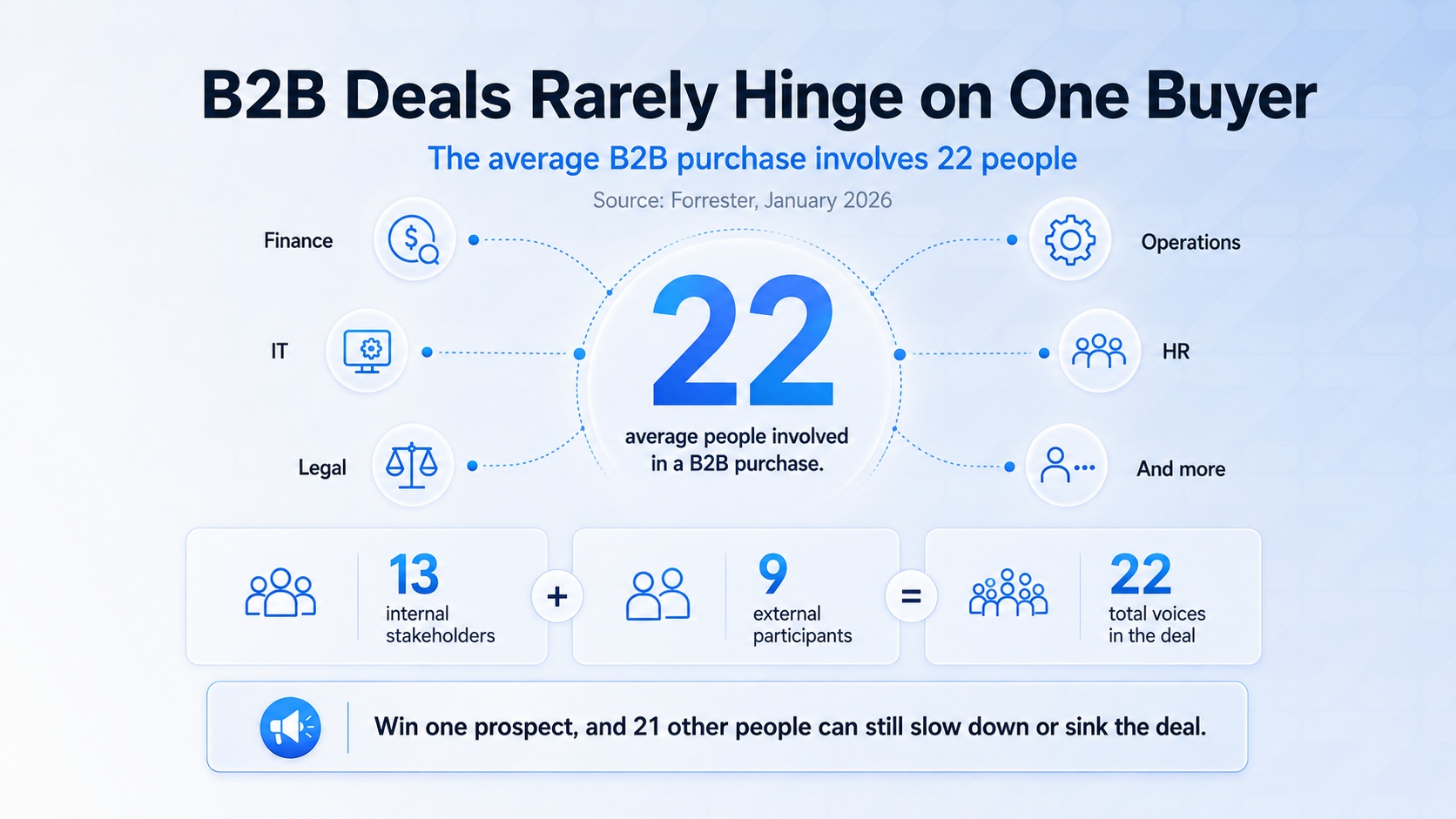
According to Forrester, that amounts to an average of 22 people participating in buying decisions.
The end result? Even if you have a single-threaded deal that looks healthy in the CRM, there’s no guarantee it won’t flatline.
SDRs are now in a spot where the bottleneck has moved from booking a meeting to helping a group of people they’ve never met reach a consensus. Naturally, that calls for some adjustments.
Map the committee before you pitch
While this is a tougher assignment than SDRs might hope for, there are ways to approach this. The answer is largely a matter of preparation.
First is conceptualizing who will take part in the buying decisions. Though their roles within the companies will vary, each member of a buying committee generally falls into one of a few different categories, which generally break down along these lines:

Each role has its own preferences and concerns when it comes to adding new tools to their workflow. While there are some obvious sticking points for certain members of a company, like price and integration, others are more concerned with how it impacts their departments or their own workload.
So how do you handle that? Adjust your approach to preemptively identify and tailor your messaging to the probable members of the buying committee. In practice, this means that enrichment and account research should feed into a stakeholder map rather than a simple contact list.
Multithreaded outbound in practice
Multithreaded outbound is a matter of account depth, rather than volume. Instead of reaching out to 50 near-identical prospects, the approach should be to sequence tailored messages to three or four roles in the same account.
This doesn’t mean to bombard the account. It’s a matter of creating impressions and presenting a cohesive message that addresses the likely concerns of individuals within the buying committee. Ideally, once this committee comes together, serious concerns will already have been addressed in a way that increases the likelihood of a sale.
LinkedIn and email should work together as part of the same account strategy. A useful comment, a relevant connection request, and a well-timed email can build familiarity across several people. When coordinated properly, the account sees a credible presence, a consistent point of view, and evidence that your product is worth considering.
There’s also the matter of working directly with the champion to help them help you with the buying committee. Staying on top of communications with them, arming them with content, and helping them be in a position to address their coworkers’ concerns is time well spent.
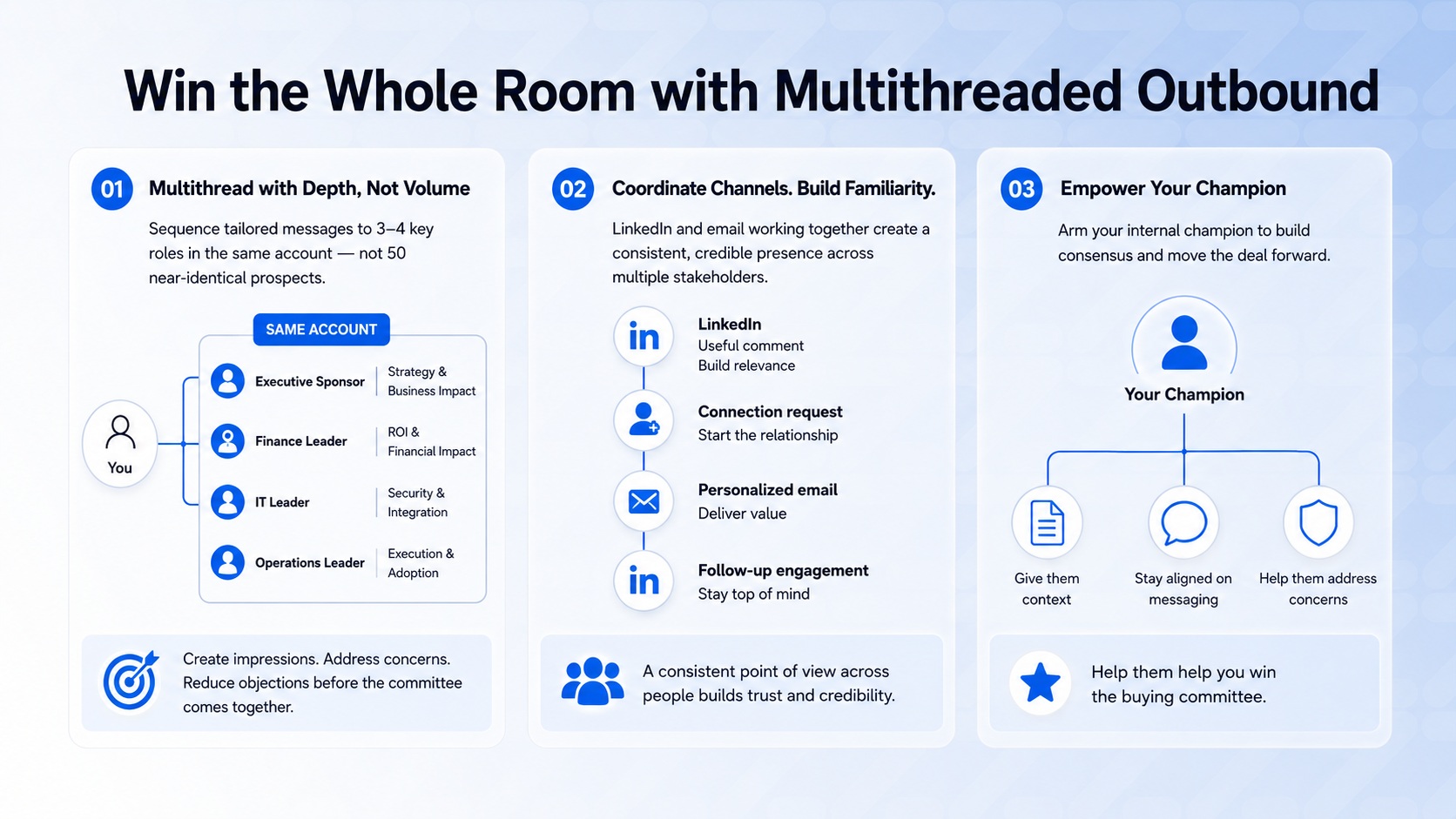
What “good” looks like when dealing with a buying committee
Something we’re always focused on here at Zeekeo are the measurables of outbound. It’s not enough to just do these actions; it’s about the results. So what are the best metrics to track here? As ever, it’s not just a matter of booking meetings or other activity-focused vanity metrics. The bottom line still boils down to revenue.
Tracking shareholders engaged per opportunity is a more valid health metric here. Deals with three or more engaged contacts within an account traditionally close faster and churn less.
The key with this approach is that fewer, better-orchestrated accounts beat a wide, shallow blast every time.
The takeaway here is to remember that you’re no longer just selling to a person. You’re helping a committee reach an agreement.
Outbound built around a single point of contact within an account is more likely to stall out, even if that point of contact is enthusiastic. Instead, building around the buying group turns a gummed-up pipeline into closed revenue.
Book a Launchpad strategy session to redesign your outbound around multithreaded, account-based plays that win the whole room.
Subscribe to our blog
Lorem ipsum dolor sit amet, consectetur adipiscing elit. Pellentesque eget nunc finibus, venenatis purus eget, porta enim. Fusce a tempor diam, sed consequat purus.

Stefan Bako
Stefan Bako is the Customer Success Lead at Zeekeo where he helps businesses build stronger pipelines, create meaningful customer relationships, and turn growth strategies into measurable results. Working closely with clients, Stefan combines technology, data-driven insights, and a customer-first approach to help organizations achieve sustainable revenue growth. Outside of work, Stefan is passionate about travel, exploring new destinations with his family, hiking scenic trails, and spending time outdoors with his dog. He enjoys discovering new perspectives, whether through business, adventure, or the people he meets along the way.